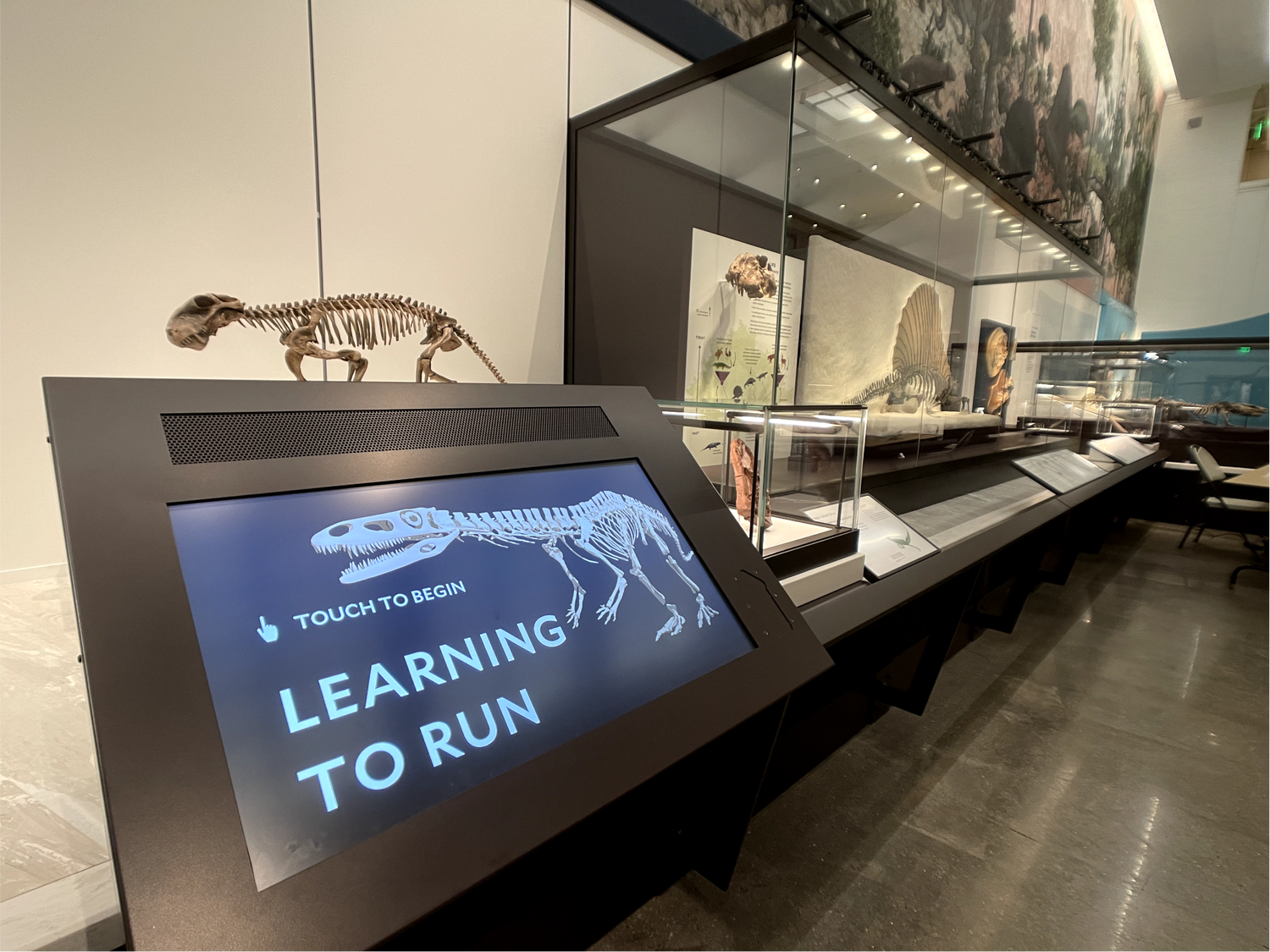
Natural history museums hold the longest dataset humanity has — and face one of its hardest communication problems: helping the public use the deep past to reason about the future. Climate change, wildfire ecology, sustainable energy — these are stories where the desired outcome isn't delight, it's understanding.
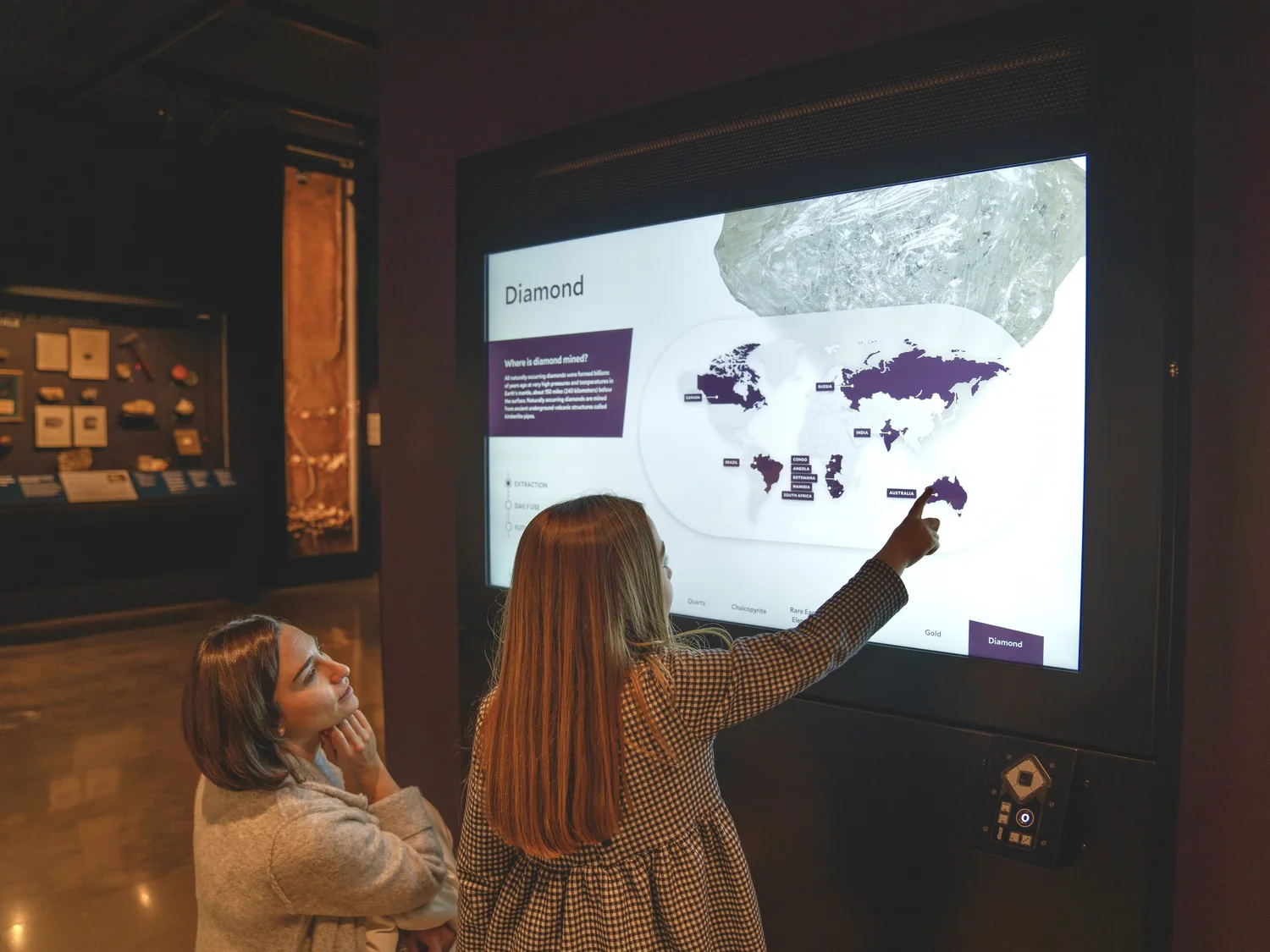
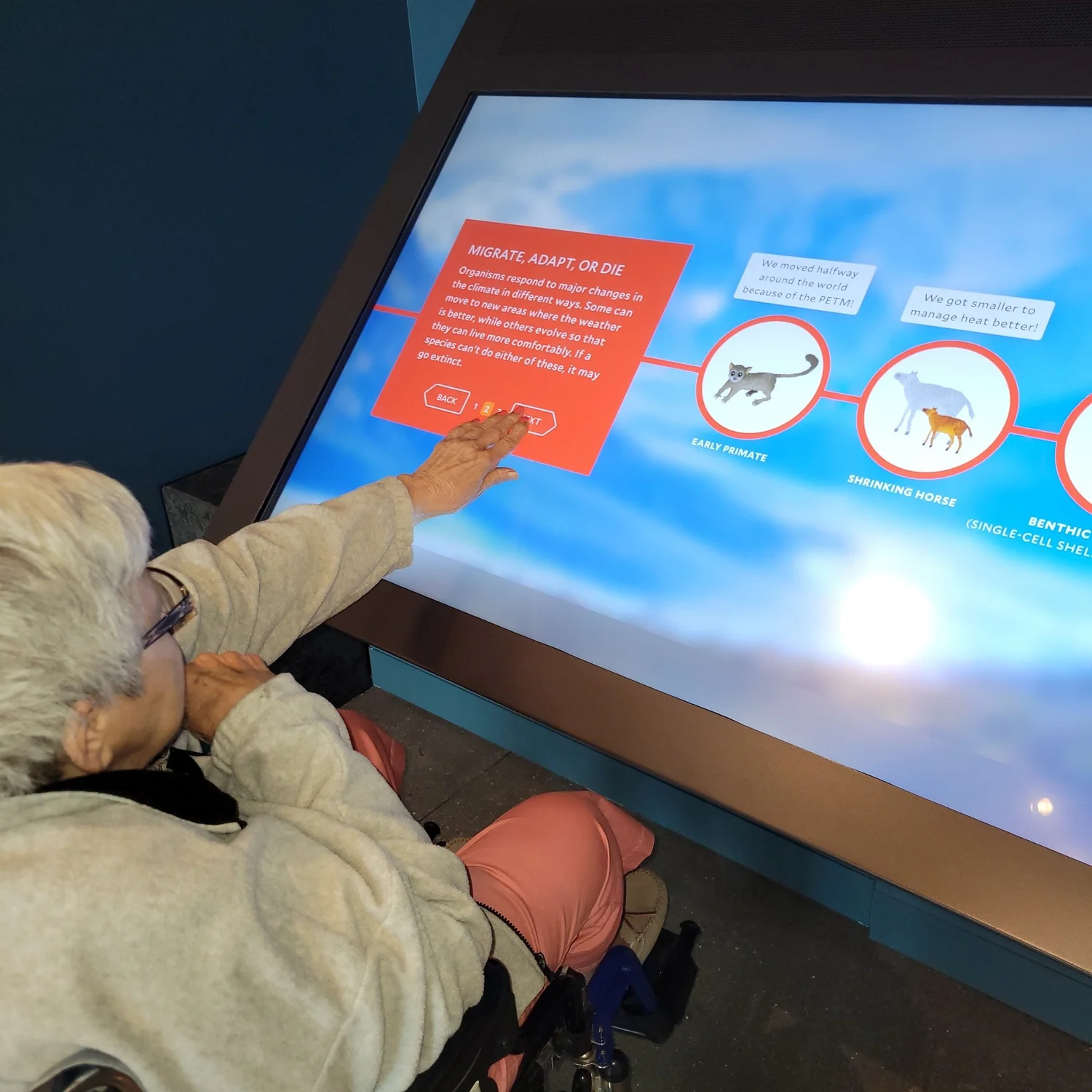
As part of its full architectural renovation begun in 2020, the Yale Peabody Museum designated fifteen areas where digital multimedia interactives could best serve its mission to communicate Yale's natural science research to the widest possible audience. The Peabody engaged Sitara to develop the interactive concepts, the digital content strategy, and the software for all of them — a building-wide interpretive system, not a set of screens.
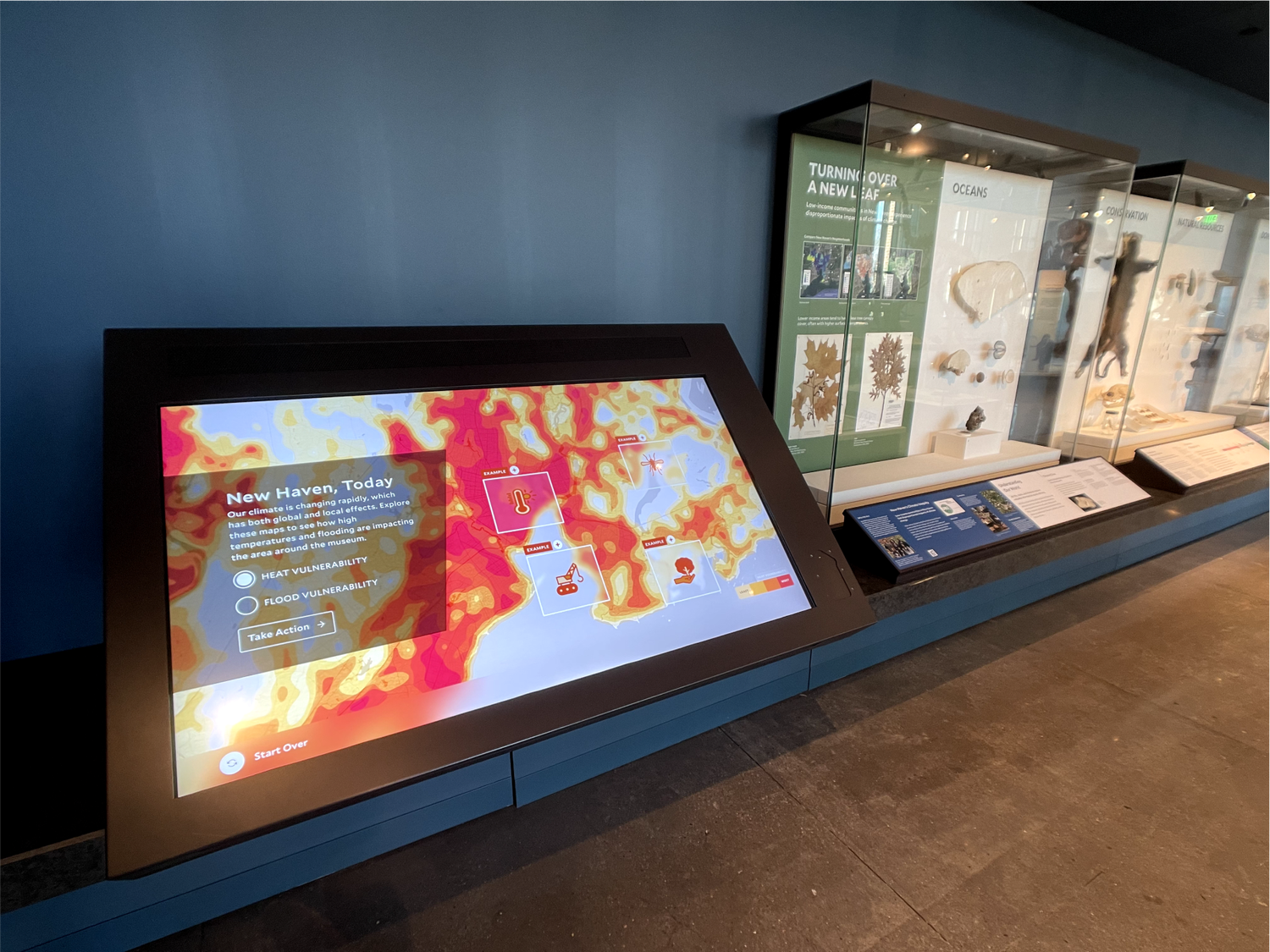
The work was integrated where it matters: upstream. Over a two-year collaborative process, we worked with Yale research faculty and the Peabody's collections and Visitor Experience teams to identify the stories that couldn't be told by artifacts alone, and with exhibit design firm Reich & Petch so that the digital layer and the physical galleries share one design language. We joined at the media-design stage, working from the museum's concept designs — confirming visitor goals, user scenarios, and evaluation plans before any production began — so the digital layer was designed with the galleries, not retrofitted into finished rooms.
Before designing a single interactive, we mapped the museum itself. Reading across the planned galleries, Sitara identified and named the thematic through-lines the exhibits were collectively reaching for, sorted every planned media station against them, and shared that map with the Peabody — where it helped the museum sharpen its communication strategy for each kiosk, and gave our own interactives their orientation. The interactives don't decorate the galleries — they carry the through-lines.
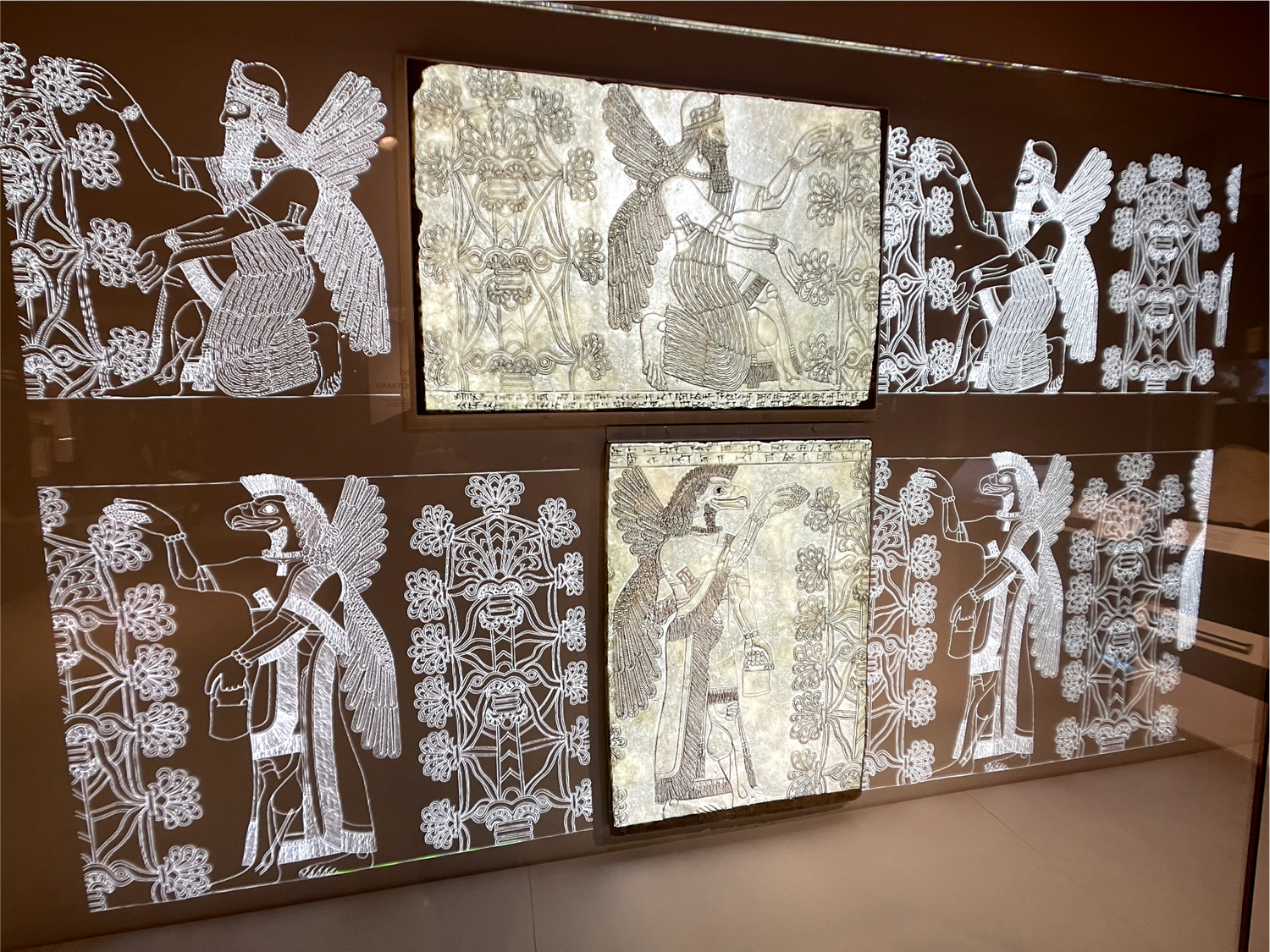
We also tested whether it worked, and made what we found public. Our user research on the climate perception gap and on the Tiktaalik locomotion interactive is public — because interactives meant to shift understanding should be evaluated on whether they actually do.
A renovation like this happens once in a generation. That horizon is the museum’s own commitment; the interpretive system we built for it is specified for a decade of operation and engineered to keep teaching as the science it carries moves forward.