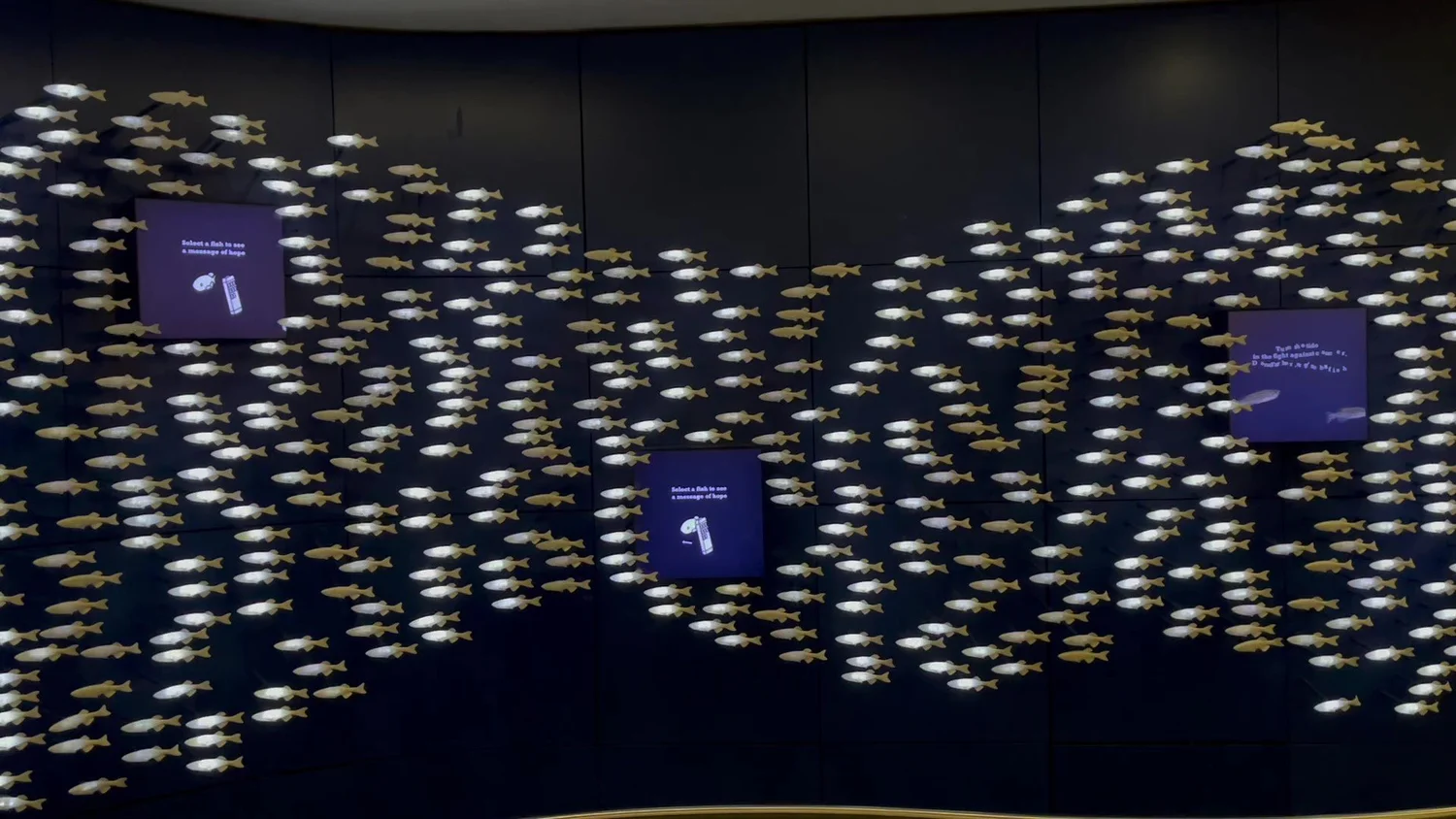
How do you make visible the thing that actually drives medical research — thousands of individual people deciding, year after year, that the work matters? Dana-Farber Cancer Institute wanted a commission that would let donors express why they're dedicated to cancer research, honor the people behind each gift, and tie it all to the science itself. It's a problem with no metric: the outcome isn't engagement, it's meaning. That's a problem shaped for us.
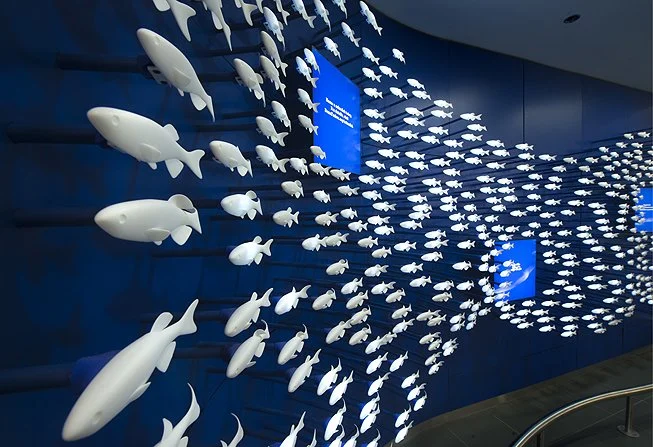
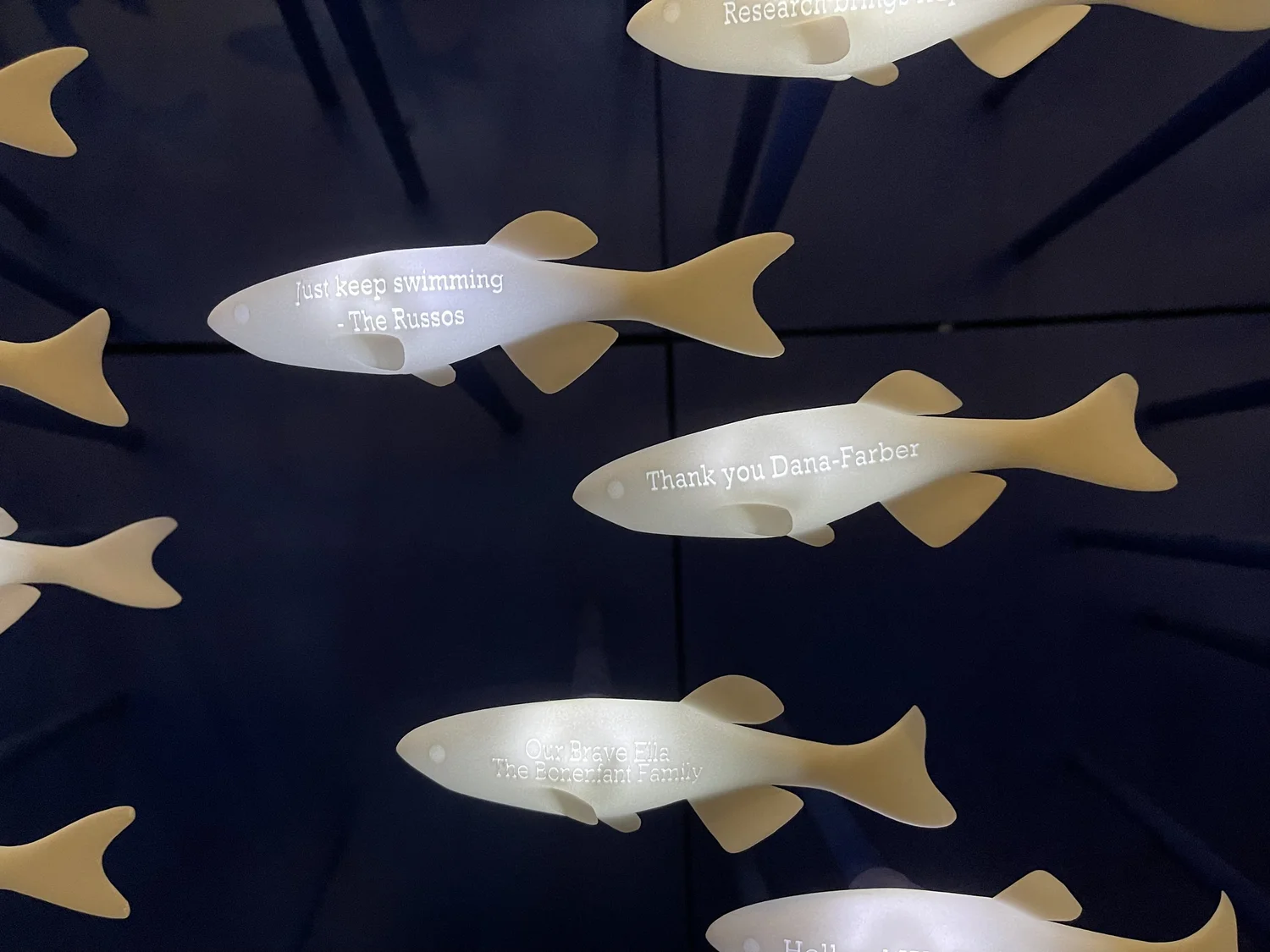
The zebrafish gave the story its form. A model organism whose genes are remarkably like our own, the zebrafish has played a key role in Dana-Farber's discovery of lifesaving therapies for decades. Sitara designed an interactive sculpture of 477 3D-printed zebrafish — each one inscribed with a donor's personal message, each one a point of light in a single school. One fish is small; the school is luminous. The sculpture is the argument: many small contributions, compounding into major change.
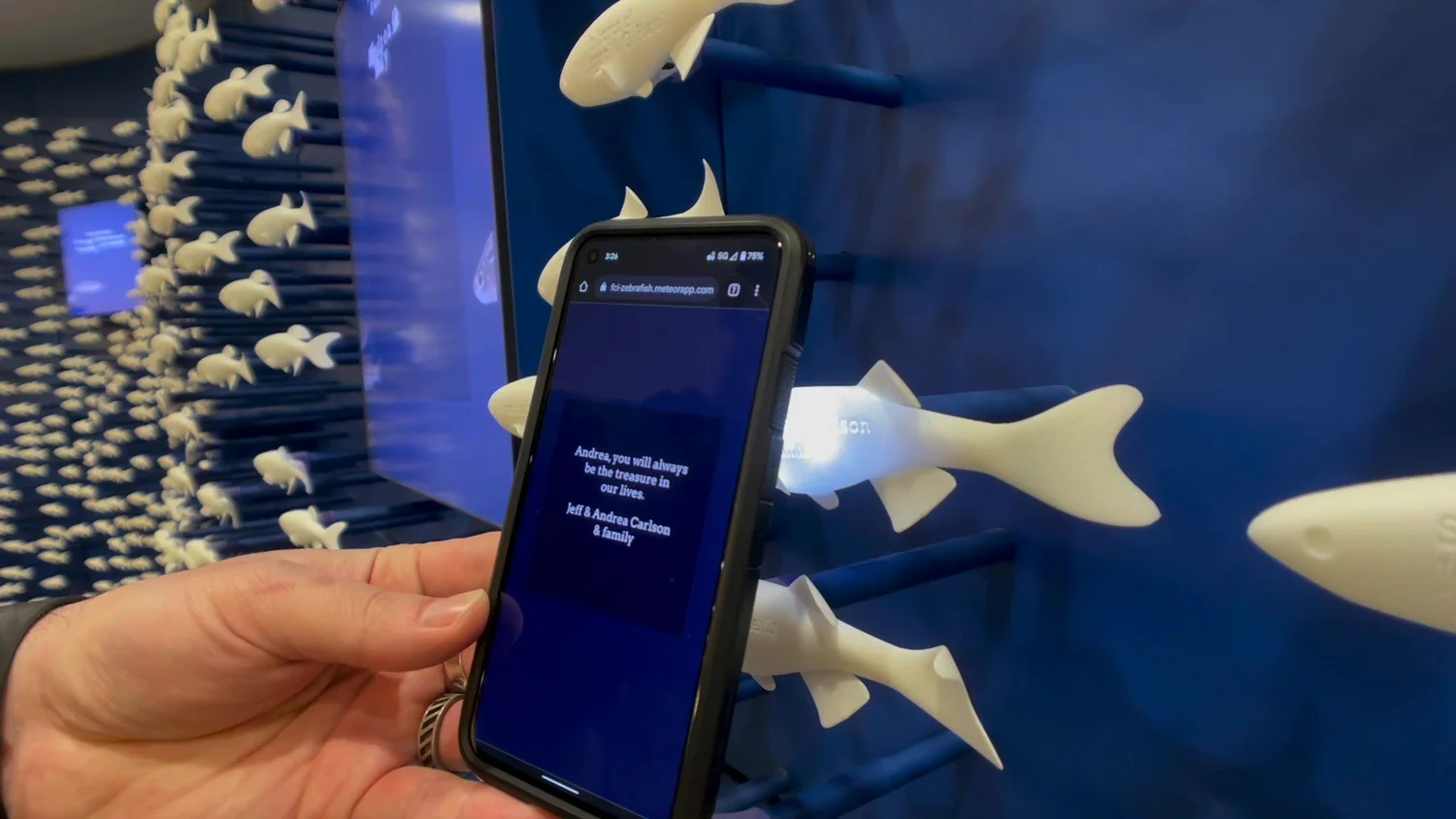
In its original form, each fish carried custom-built capacitive touch sensors — touch a fish, and its donor's message appeared on a nearby screen. In 2021, we returned and re-engineered the interaction layer: the sensors in all 477 fish were replaced with passive NFC tags, so any modern phone can scan a fish and load its message instantly, while the wall responds with an illumination sequence. We published what we learned instructing first-time visitors to use it as a technical report.
That update is the part we'd point to in a systems review. The sculpture didn't get replaced when its first interaction technology aged — it got a new interaction layer, because it was engineered from the start as a long-lived system with replaceable parts. We design donor recognition the way institutions need it to work: across technology generations, not product cycles.