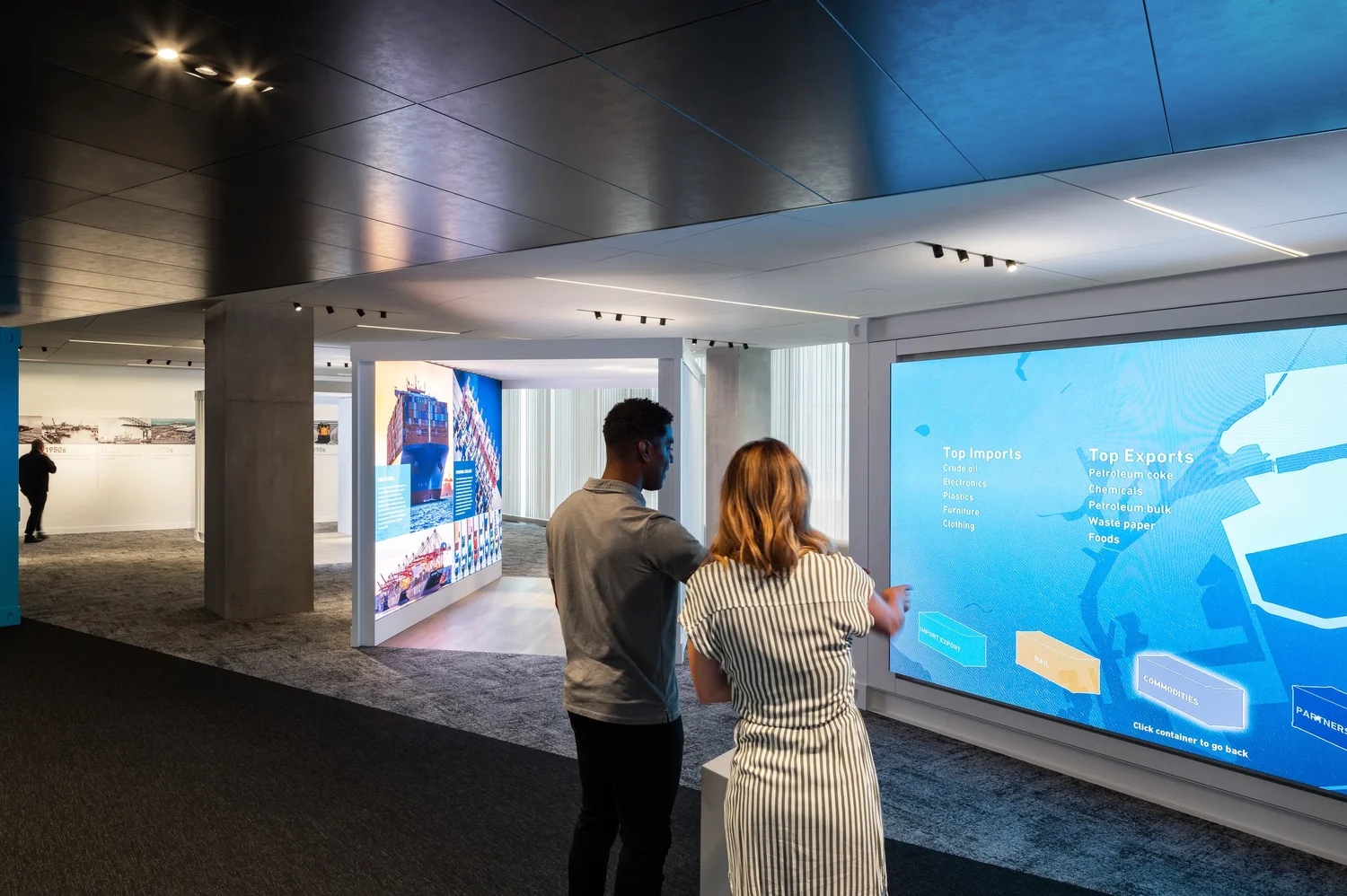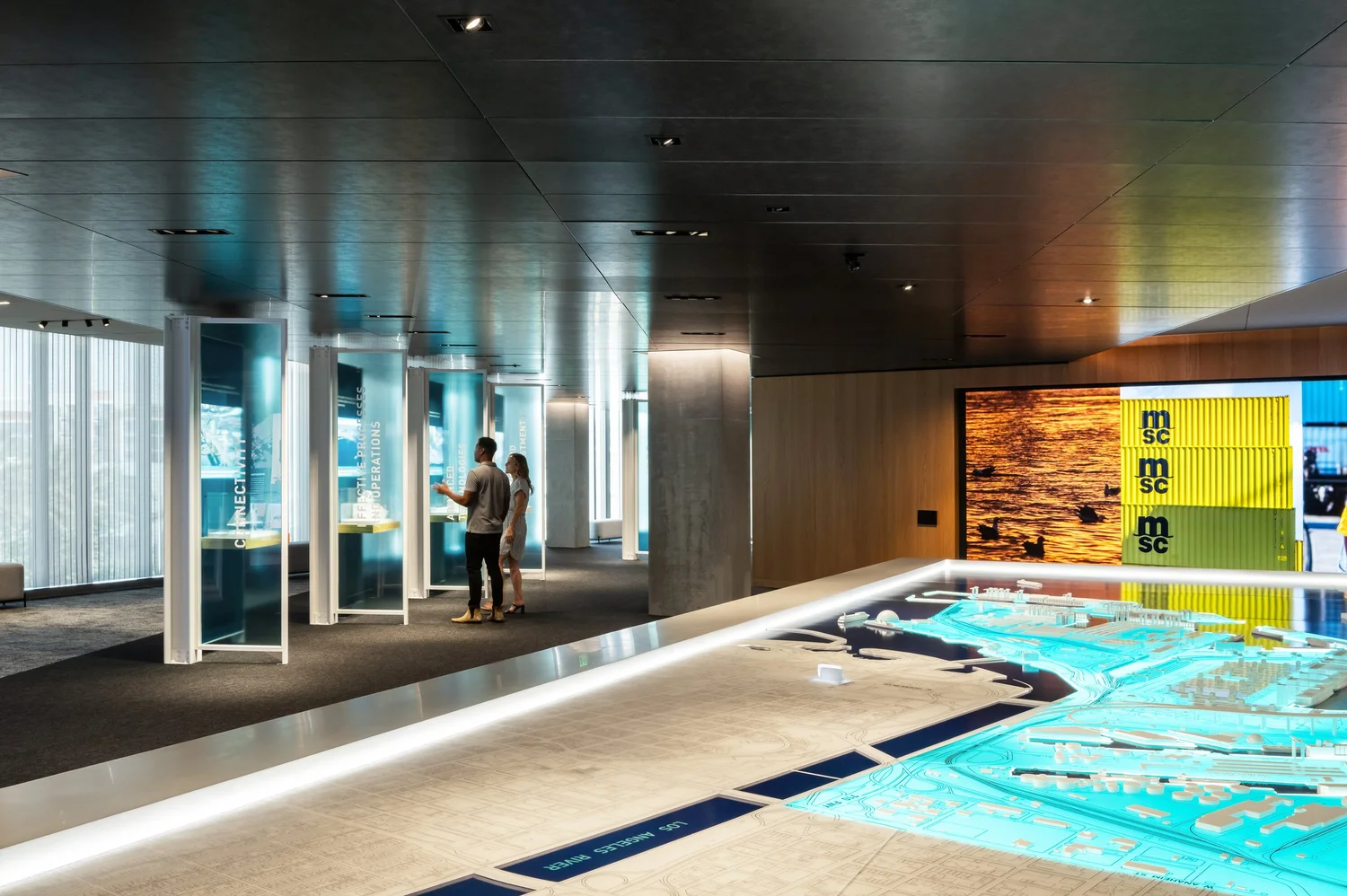
A port is the kind of infrastructure the public depends on completely and almost never sees. As part of the Long Beach Civic Center Redevelopment Plan, the Port of Long Beach built a new headquarters with a museum dedicated to making its work visible: how the Port operates, its history, and — hardest of all — its transition toward becoming the greenest container port in the world. Opened in 2024, it is named the Congressman Alan Lowenthal Global Trade & Education Center.
Environmental transition is a story that resists ordinary exhibits, because it isn't finished. The Port's targets are real and dated — zero-emissions cargo handling by 2030, zero-emissions trucks by 2035, greenhouse gases cut 80% below 1990 levels by 2050 — and a static display about them is out of date the day it opens. That problem — civic, evolving, never finished — is why this commission belonged at Sitara.
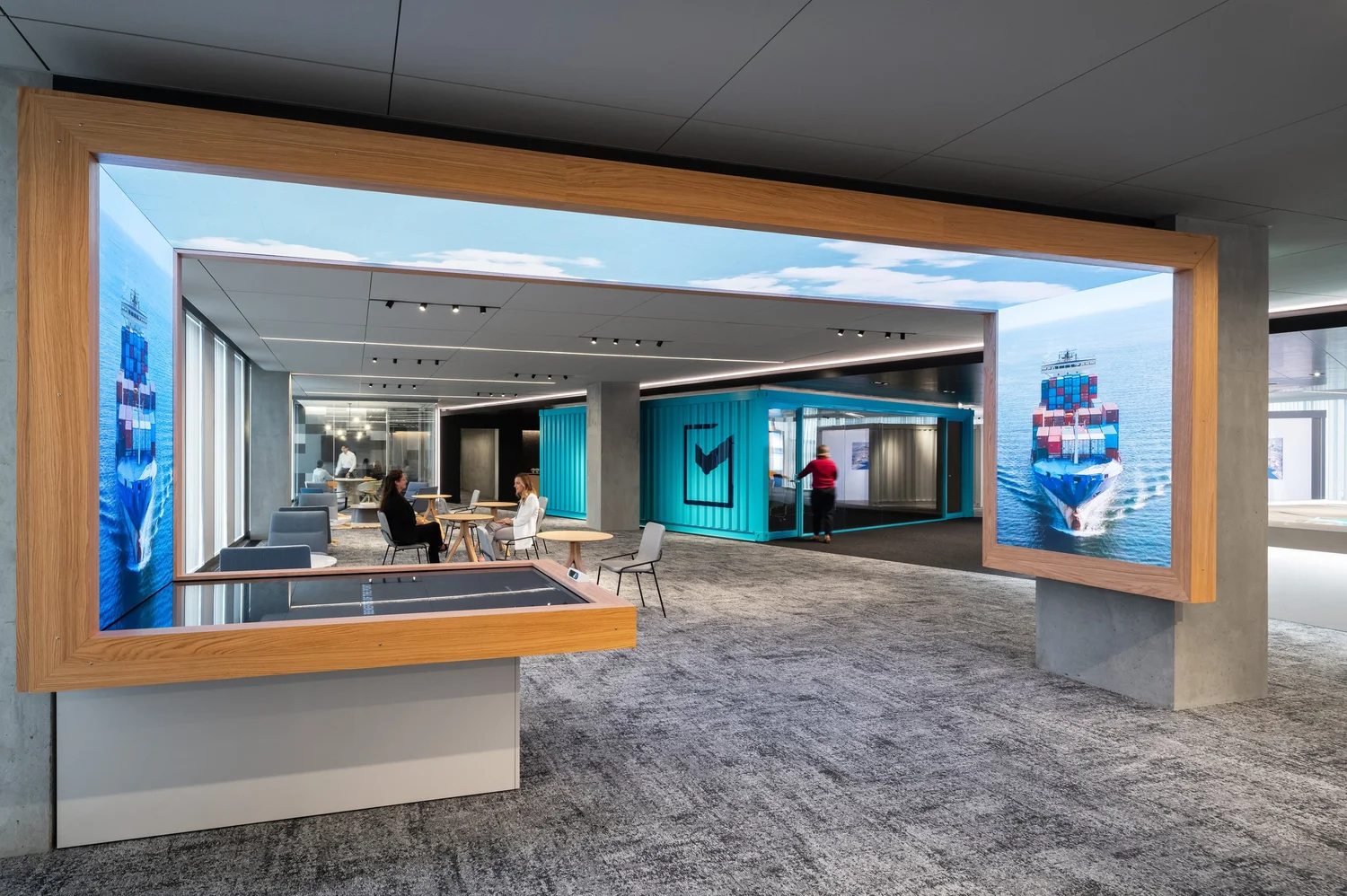
Working with Cinnabar California and Faculty, we designed and produced five interactive systems serving the gallery's full range of visitors — business partners, elected officials, dignitary delegations, and event guests. Behind them sits the system that makes the museum durable: a custom-built content management system fed by the Port's own public data — air-quality monitoring across San Pedro Bay, port operations reporting — and designed so the Port can update sustainability content as it meets current targets and sets new ones, for as long as those commitments run. The interactives aren't an exhibit about the Port's commitments — they're the instrument the Port uses to stay accountable to them, in front of the exact audiences who hold it to account.
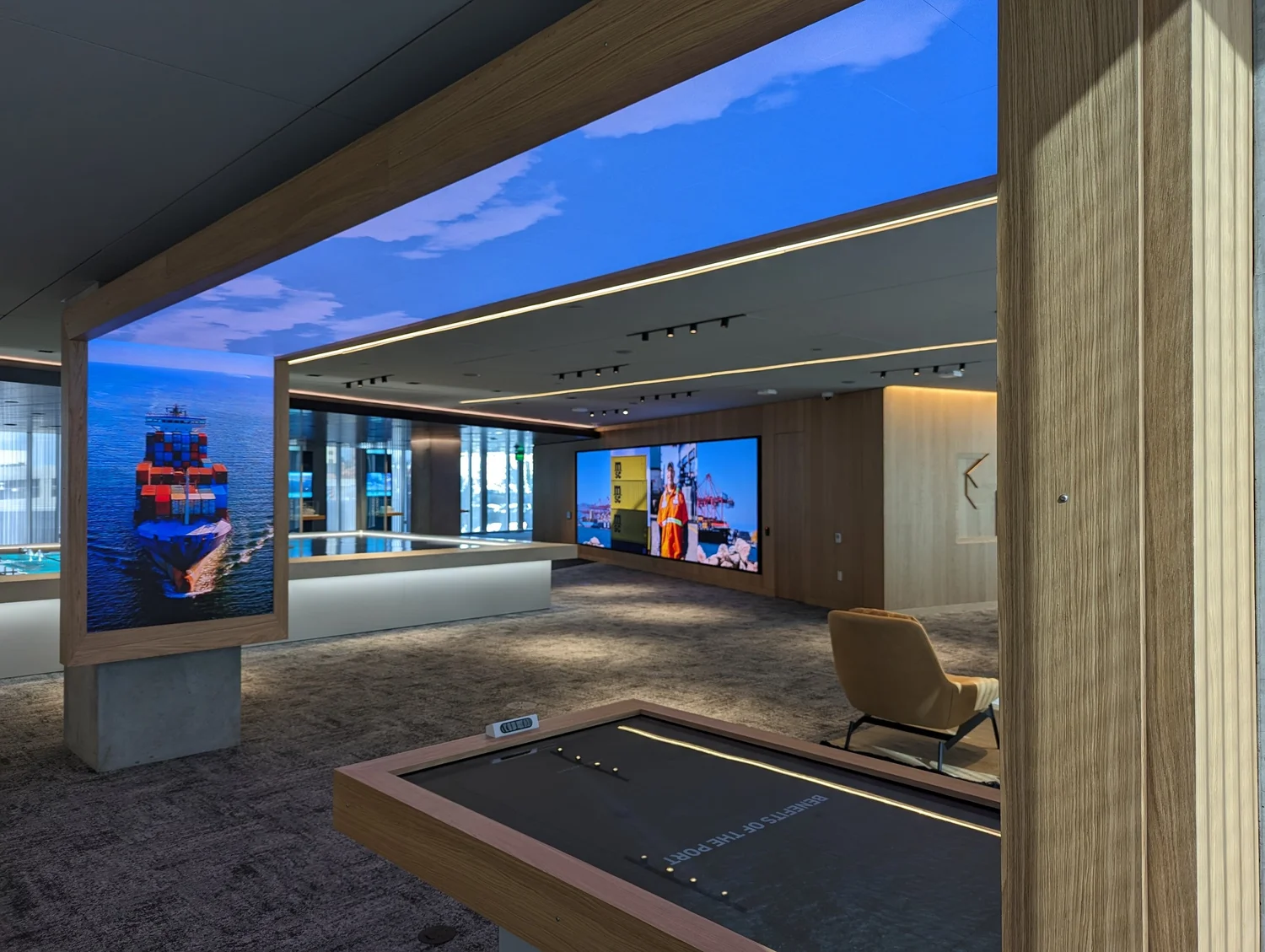
The interfaces themselves were designed for the Port's global public. Visitors arrive from around the world with different norms and concerns about shared touchscreens, so we built gestural, touch-free control using UltraLeap hand tracking — every interactive fully usable without touching a display. Inclusion engineered into the interaction layer, not appended to it.
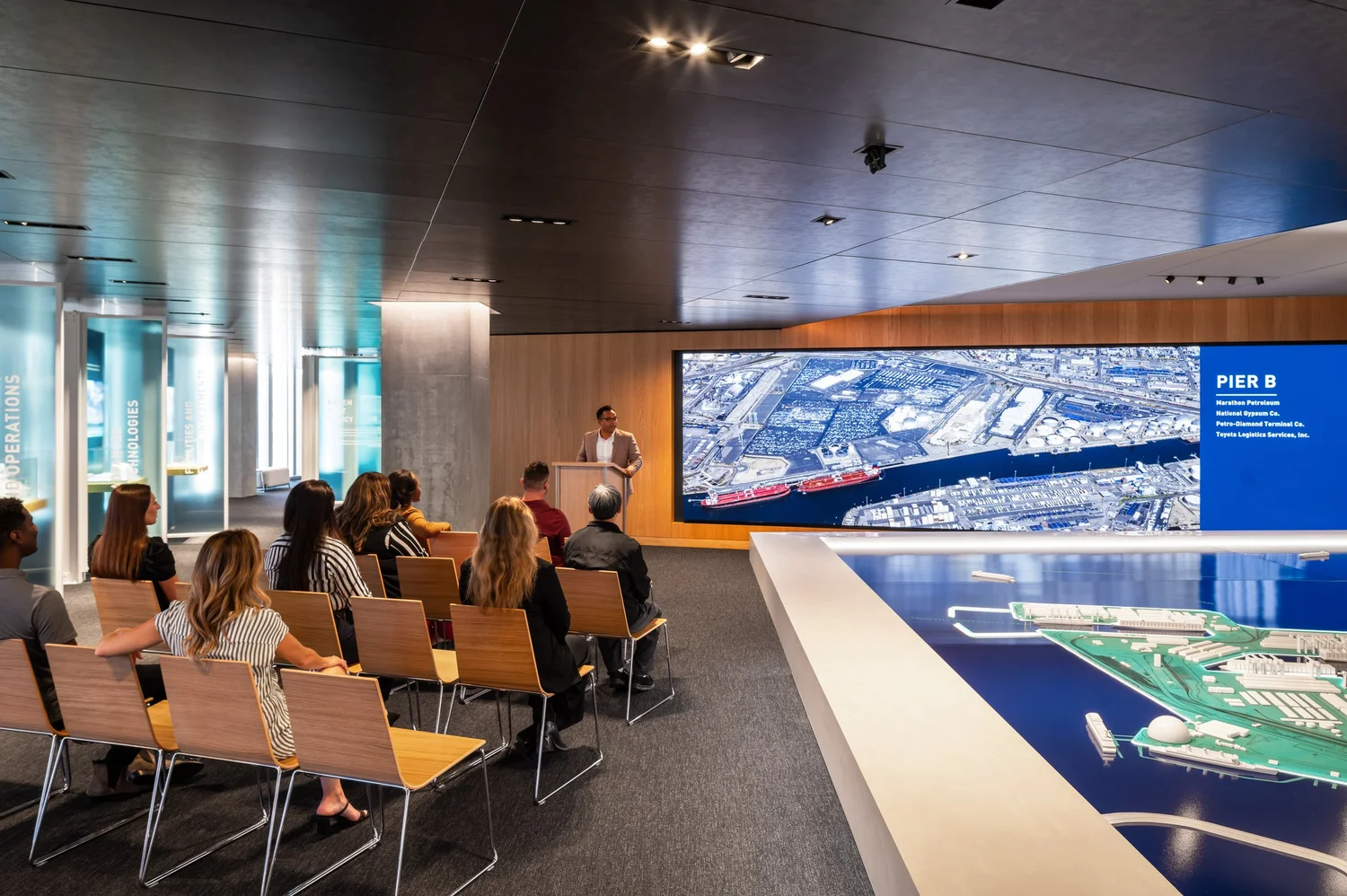
We design exhibits the way ports design infrastructure: specified for a decade of operation, built to keep going. The Port's targets are dated to 2050 — so the Port's ability to keep telling that story, on its own, was written into our scope of work from the start.