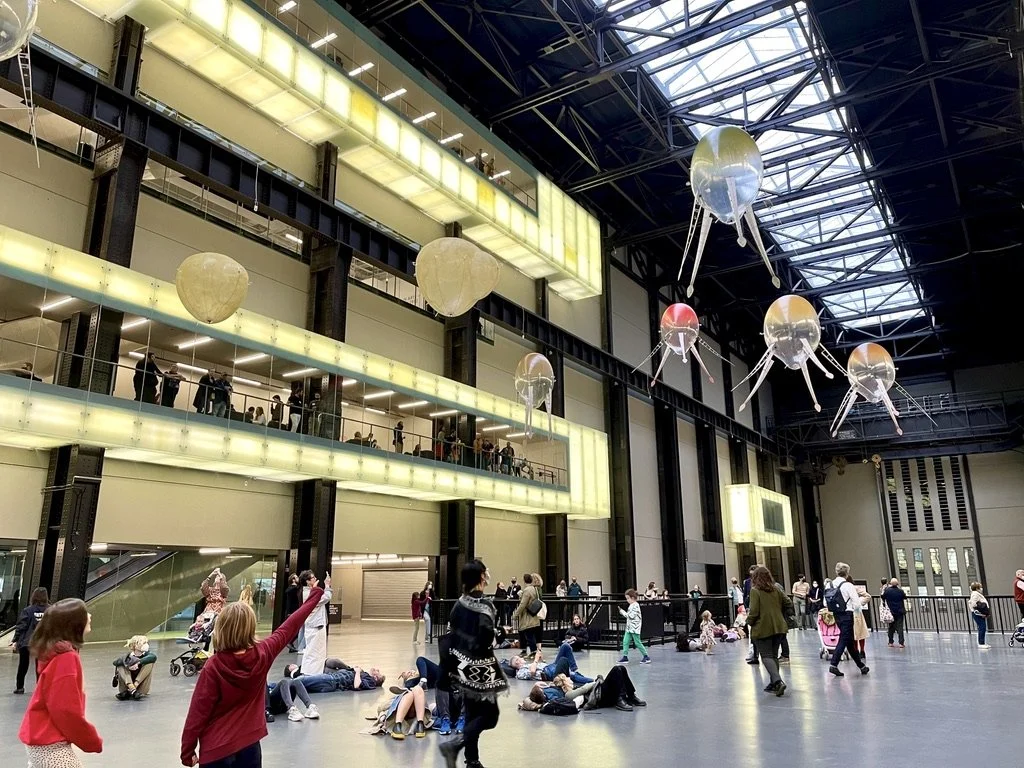
How the public comes to understand artificial intelligence is one of the defining questions of this century — and it is exactly the kind of problem we exist for: enormous, tangled, and impossible to measure with engagement metrics. You cannot A/B test a change in how someone imagines the future.
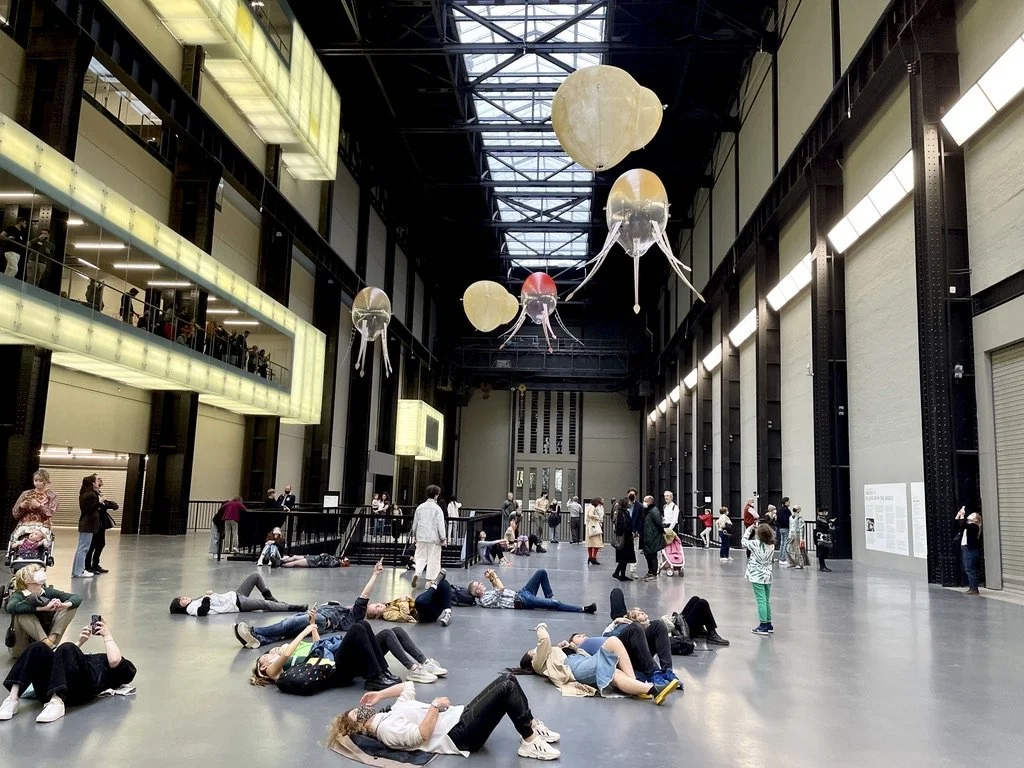
Anicka Yi's 2021 Hyundai Commission for the Tate Modern's Turbine Hall set out to meet that problem on the public's own ground. Rather than presenting AI as product or threat, she proposed an aquarium of machines — autonomous lifeforms, called aerobes, that would live in the hall and let visitors imagine an intelligence neither threatening to humanity nor subservient to it: a parallel form of life. She approached Sitara as the collaborator who could make that speculation behave.
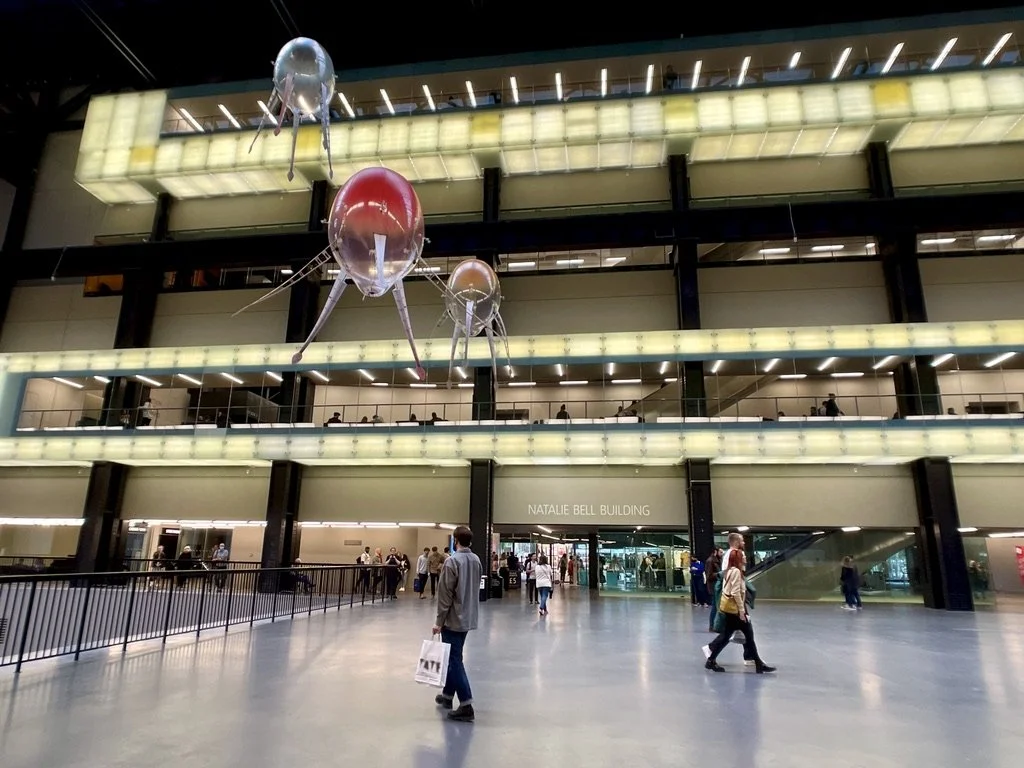
We began with research, not rendering. Working with Anicka Yi Studio and the Tate's Audience Insights team, we studied public expectations of artificial intelligence — and used those findings to inform, and deliberately subvert, what the work would do. We then designed the artificial-life system the way ethologists study real ones: the aerobes — helium-filled soft robotic machines modeled on the lifecycle of the Aurelia jellyfish, in two distinct phenotypes — composed their behavior from goal-directed instincts, with each agent's parameters mapped to personality traits so that every aerobe decided, moved, and responded as an individual. Genuinely autonomous behavior, not choreography — sensing visitors through the hall itself, running continuously in public for four months in one of the most-visited galleries in the world.
We published how it works — a peer-reviewed art paper and a technical talk at SIGGRAPH 2022 — so the methods could be examined, not just admired. The installation earned the SEGD Global Design Award, CommArts Interactive Best in Show, and Fast Company Innovation by Design recognition.
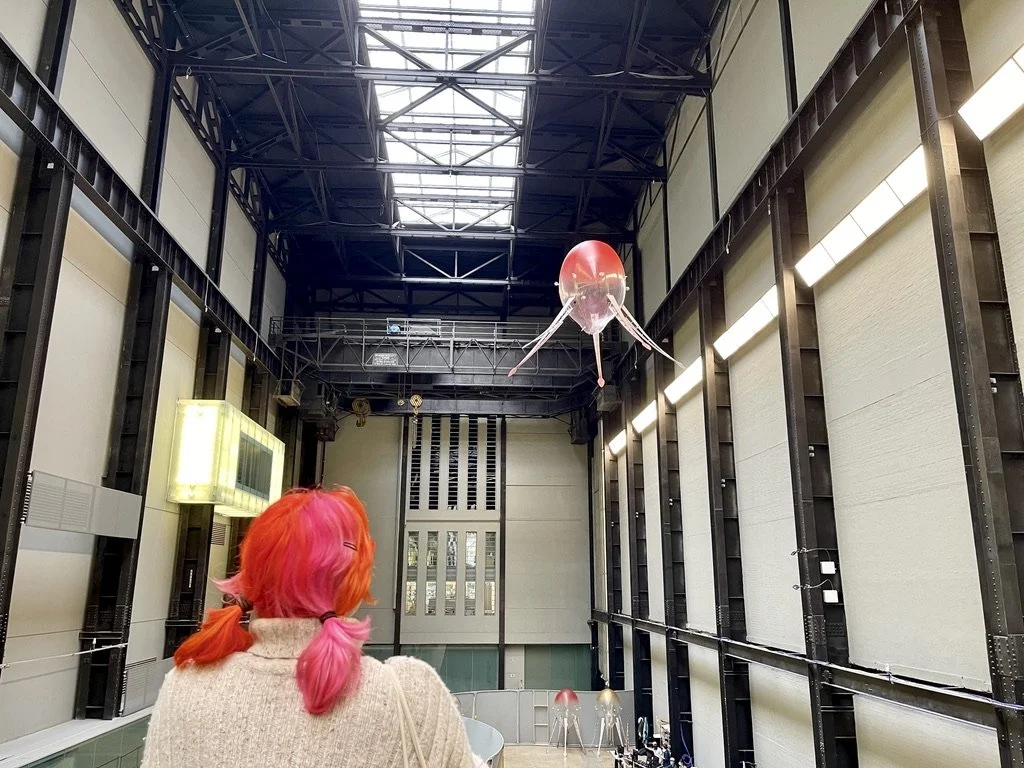
This is what spatial human-computer interaction (HCI) looks like at full ambition: when the question is how humans and intelligent systems share a building, behavioral modeling isn't a production technique — it's the medium.