When Cadillac launched its Rear Camera Mirror — an industry-first display that streams a live feed of the road behind the vehicle — it wanted more than a product demo. It wanted audiences to understand, hands-on, what it feels like when a mirror becomes a screen. That's an interface question, and interface questions in physical space are our native territory.
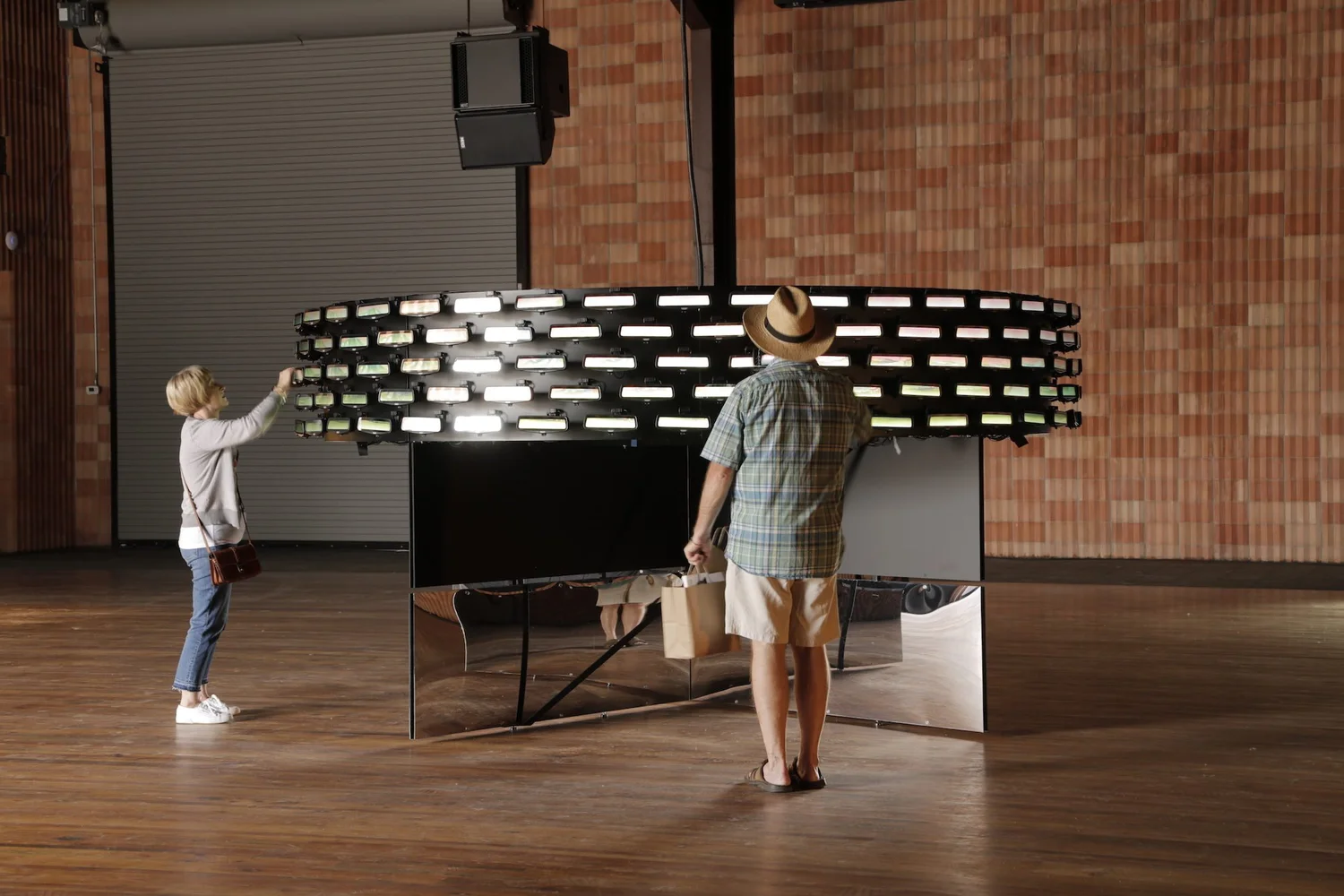
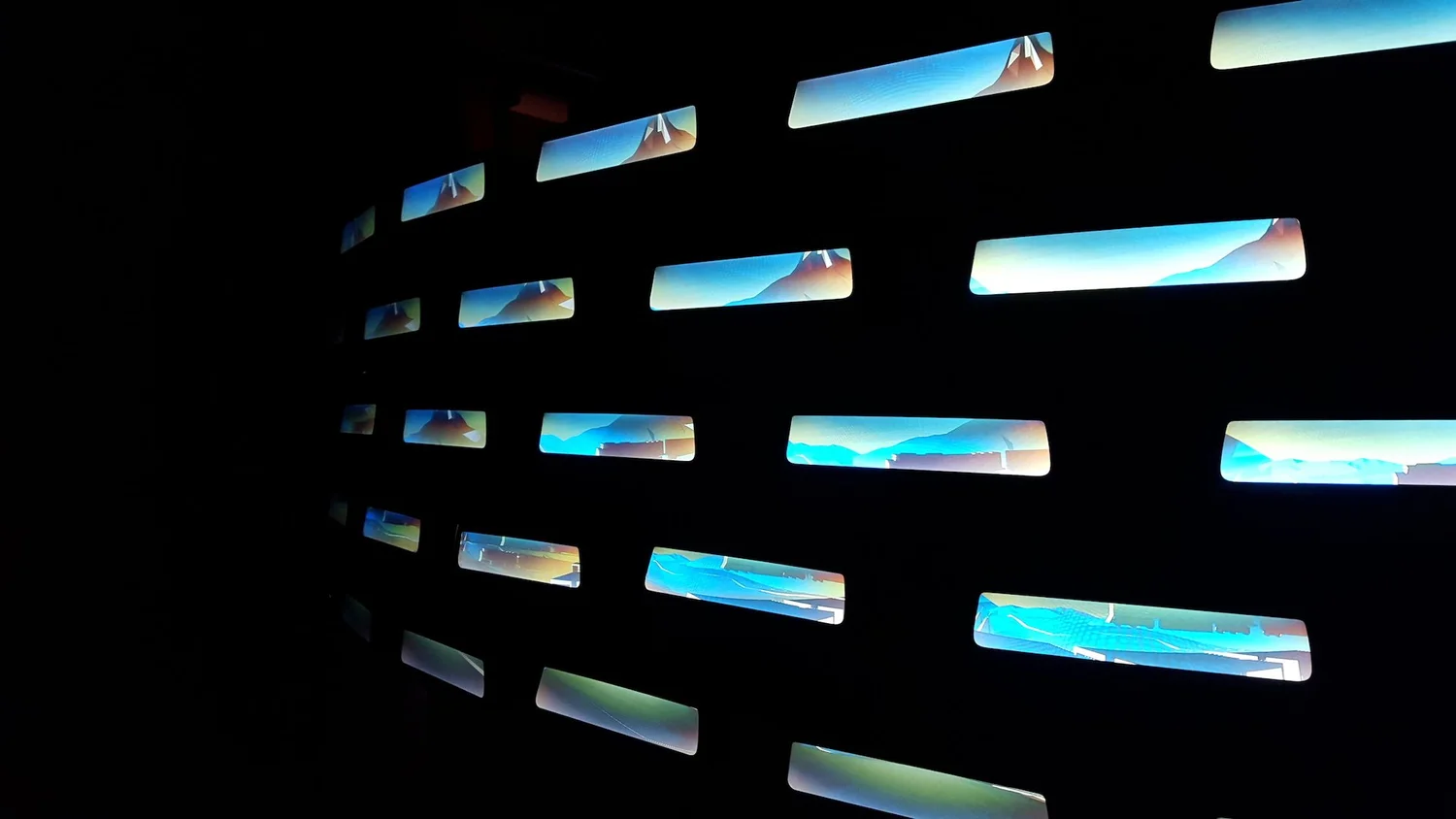
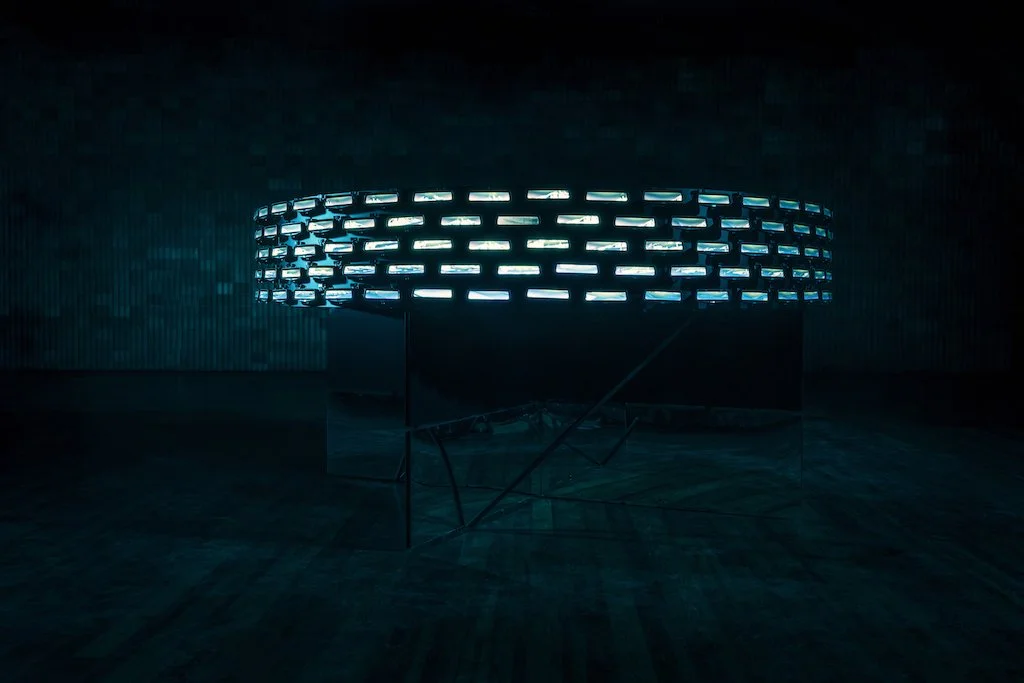
Working with Cadillac's content marketing team, Gentex Corporation, and Interview Magazine for the 2017 Marfa Film Festival, the team — then at Midnight Commercial, now at Sitara Systems — developed Horizon: an augmented reality sculpture built from 200 Rear Camera Mirrors, formed into a floating ring. Inside the ring lives a three-dimensional virtual landscape inspired by Marfa, complete with its own day and night cycles — invisible to the naked eye.
The interaction is the artwork. Each mirror is a movable portal: adjust it, and its live display reveals the virtual world from that mirror's exact point of view, as if the landscape had been there all along. Visitors don't watch the technology — they aim it, the same gesture they'd use in the driver's seat, discovering the product's quality by using it as an instrument.

Horizon is what we mean when we say we design interaction, not screens or content: take a display technology, treat it as a spatial interface, and build a world that can only be seen through it.